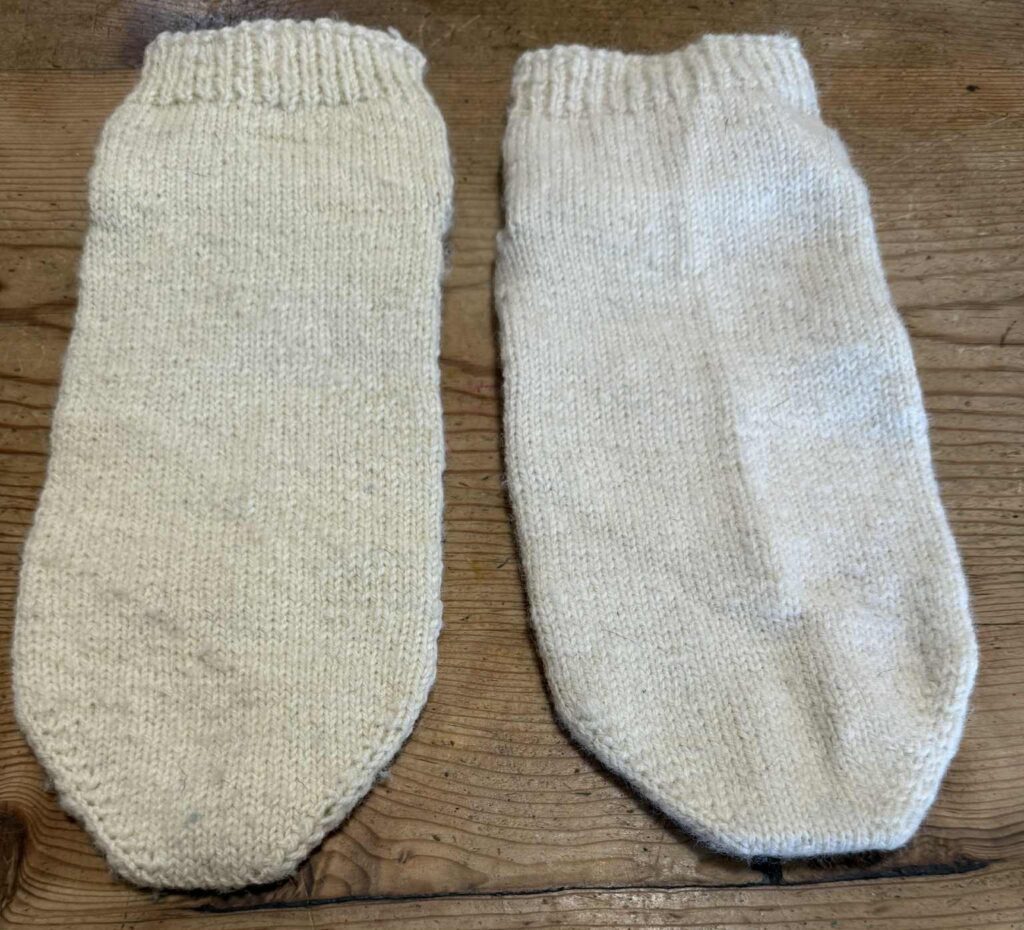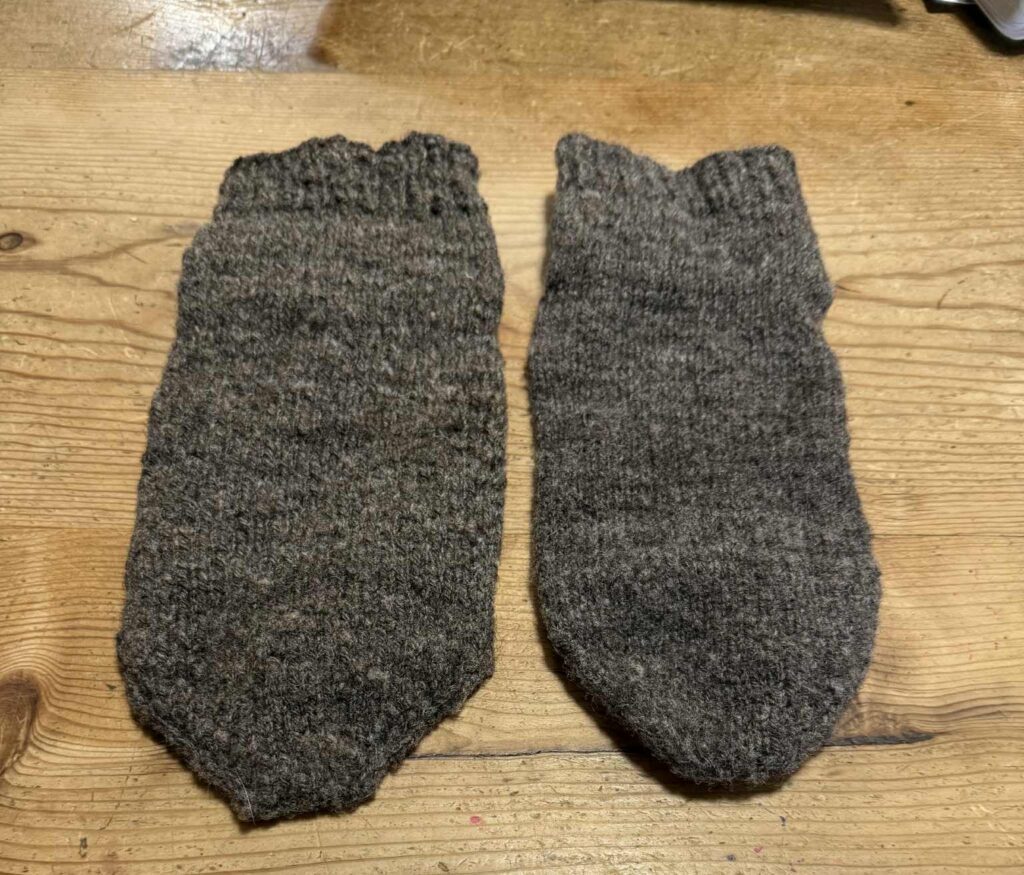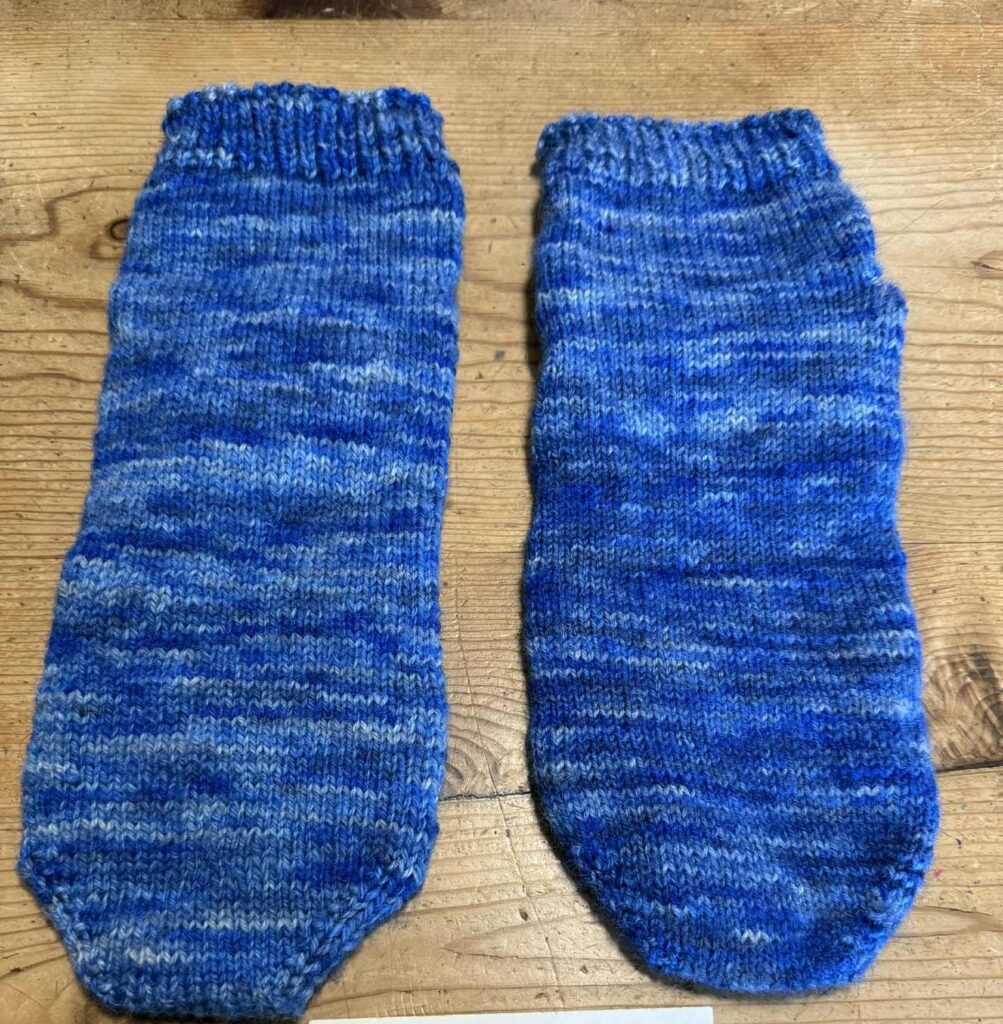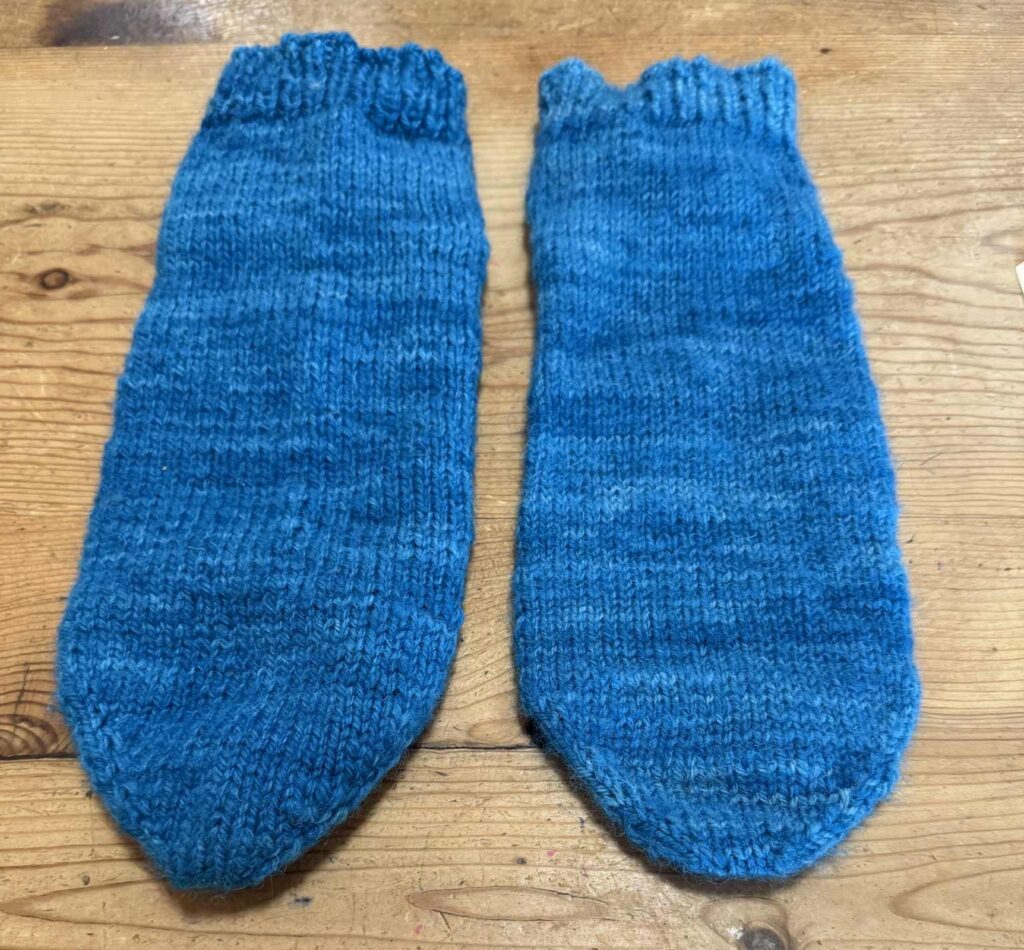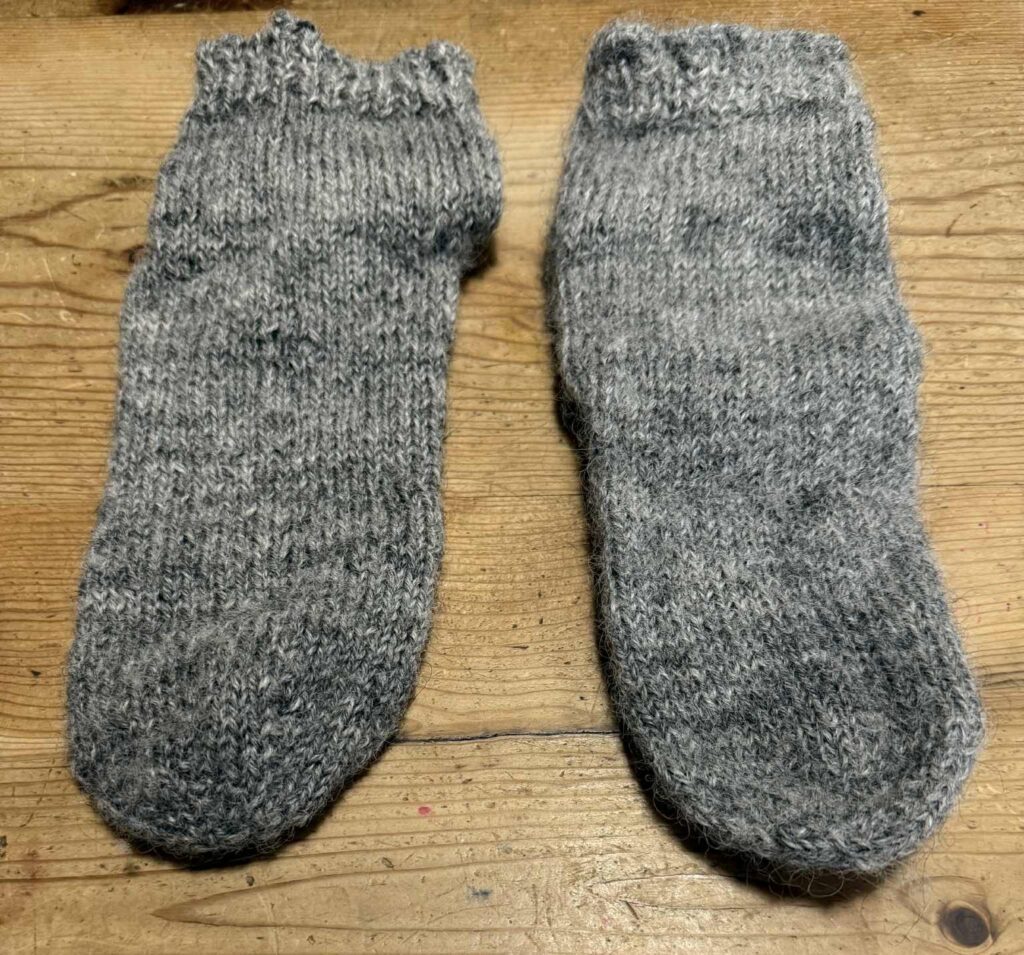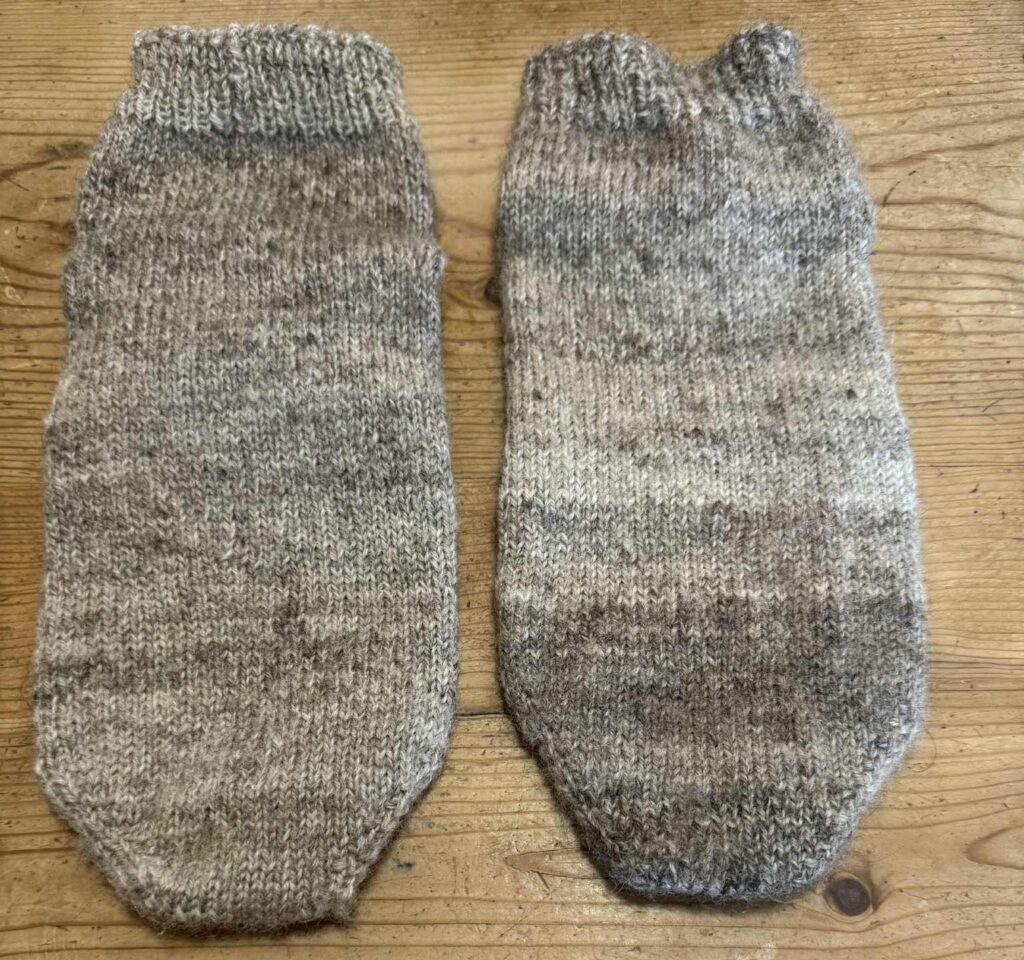

We have many different breeds of sheep here in our Fibreshed and their wool characteristics differ. Jill studied 10 different local breeds to try to see which would make the best socks – a garment we all need.
Suitability of Types of Wool for Hand-Spun Socks
by Jill Yelland-DeMooy
I recently completed my final project for the Olds College Master Spinner Program. As a member of the Vancouver Island Fibreshed, I wanted to find a project that focused on the wool produced in this region. We are lucky on Vancouver Island and the Gulf Islands to have a wide variety of sheep breeds, as well as an increasing number of farmers who are interested in paying attention to fibre production as well as meat production.
I determined that socks would be a reasonable sized garment to test the suitability of the wool produced on Vancouver Island and Gulf Island farms. Sock yarn needs to be comfortable enough to wear on our feet, but not so soft that it will not last. To create socks that will be comfortable enough to be worn frequently, sock yarn requires durability, elasticity, and the ability to insulate. In addition, the sock needs to be comfortable against our skin. Some people are more sensitive than others to the scratchiness of wool, but we all prefer to be standing on a smooth fabric, not something that makes our feet hurt.
The purpose of this study was to prepare, spin and knit socks in as similar a way as possible to determine which breed’s fleece is the most suitable. I selected fleeces from ten different breeds of sheep to compare. The breeds selected were ones which are raised within the Vancouver Island Fibreshed. Each breed of sheep contributes different characteristics to its wool. Indeed, individual sheep’s fleeces may show varying characteristics and even within one fleece, the wool may vary. The sheep from one geographical region may show differing characteristics than sheep of the same breed from a different location. This is one of the limitations of this study; I am only comparing the yarn produced from one fleece, from one farm, within the Fibreshed.
I selected fleeces from three different categories: medium wool breeds (Romney, Jacob, Border Cheviot, East Friesian, and Shetland), down wool breeds (Southdown, Shropshire, and Suffolk), and longwool breeds (Bluefaced Leicester and Cotswold). While Romney could fit into either medium wool or longwool, I find that the Romney wool produced on Vancouver Island fits better into the medium wool category than longwool. I also allocated Jacob to the medium wool category on micron count.
Each fleece was washed, combed into roving, spun worsted and plied to create a strong smooth 3-ply yarn. These yarns were knitted into socks. The ease of preparation of the yarn was recorded. The socks were each worn six times by the same person, inside shoes, rubber boots or hiking boots. Following the first five times of wearing them, they were washed by hand. Following the sixth time of wearing the socks, they were washed by machine in cold water. After hanging them to dry they were examined for any changes.
The study concluded that some of the fleeces were easier to prepare than others. Some of the yarn characteristics made certain fleeces more suitable for socks. Some were softer, stretchier or scratchier. The softest yarns were the Jacob and the Bluefaced Leicester. The scratchiest were the Romney, and the Shetland yarns. The stretchiest was the Southdown followed by the East Friesian and the Jacob. All the socks were worn in a range of outside temperatures from 10 degrees to 22 degrees and were comfortable in this range. There were very little changes overall following wearing except for the Shropshire which became quite shapeless, and the Suffolk which stretched slightly. Wearing socks six times was not enough for them to show any wear except for the Romney becoming fuzzy and the very slight felting of the Southdown and the Border Cheviot. None of the socks showed pilling or holes.
Examining the characteristics of the socks showed that the wool from most of the breeds will make strong useful socks for hiking, cold days, farm work or just daily wear. The surprising exception was the Shropshire which became shapeless and uncomfortable. The sock yarn, which was the most comfortable to wear and held its shape, while taking into account the ease of preparation was the Jacob yarn. This breed is unfortunately not very common in the Vancouver Island Fibreshed.
It will be very interesting to see how the socks have worn a year from now. The results may be very different.